
Job to be done
Time is spent reading, not deciding
Underwriters weren't slow at judgment. They were slow because every file had to be read in full before they knew what actually needed them.
Maestro AI is Nesto's internal underwriting workspace. When a mortgage application lands, it checks the file against policy — credit, capacity, character, and the documents behind each one — then shows the underwriter what cleared, what failed, and what still needs a decision.
The point was never to automate the decision. It was to remove the manual reading so underwriters spend their time on the exceptions that genuinely need judgment, with every check traceable back to the document it came from.
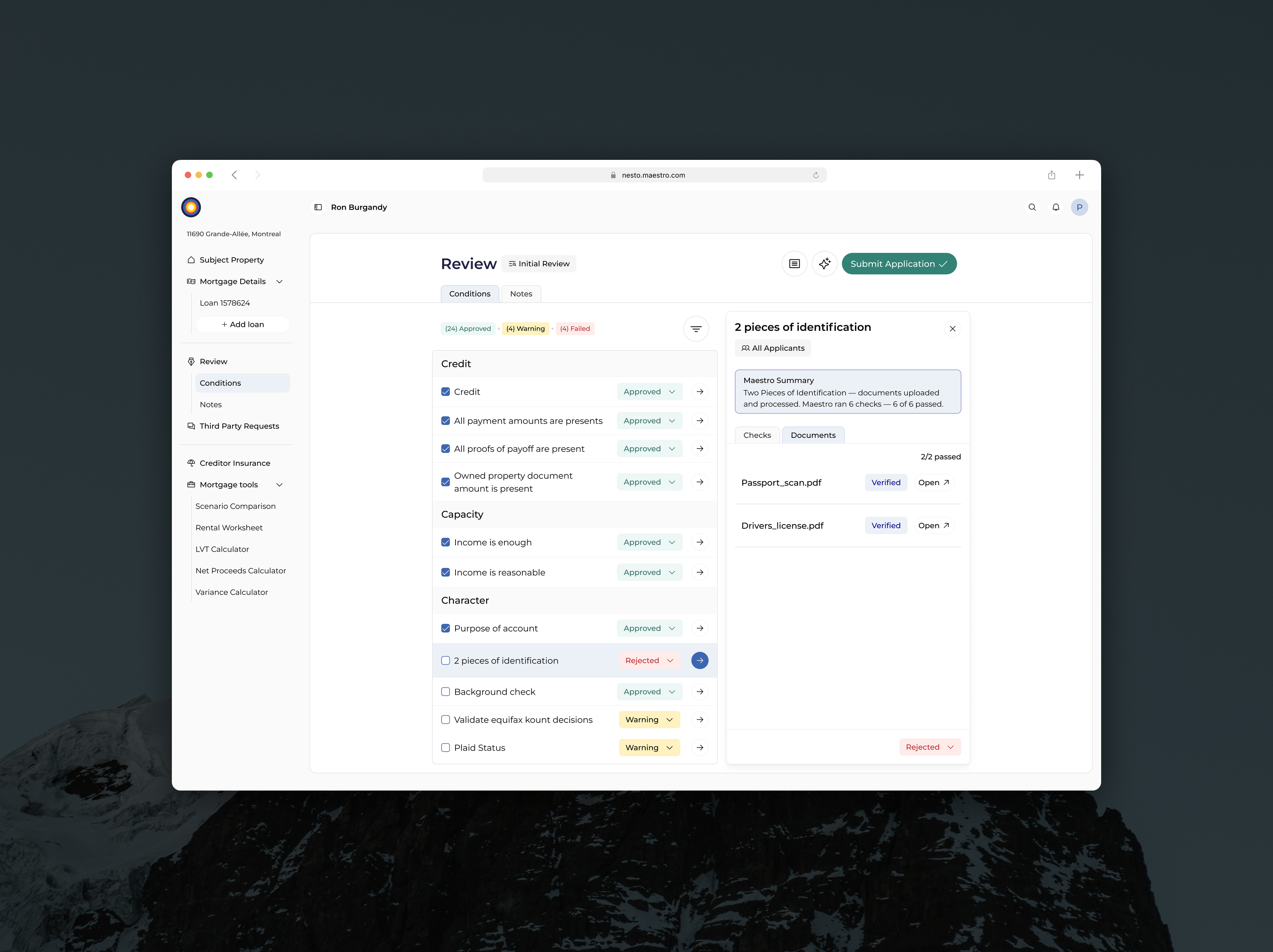
Underwriting is expert work under time pressure. These notes came out of sitting with reviewers.
Underwriters weren't slow at judgment. They were slow because every file had to be read in full before they knew what actually needed them.
If they don't believe Maestro, they re-check everything. Speed features don't matter if the habit is to verify by hand.
They scan for what's wrong. Completed checks are noise. Failed and warning states have to be louder than approvals.
A credit flag can change capacity. Horizontal links have to be visible or they lose the thread of why a decision was made.
Policy isn't perfect. They need to override a check, attach a reason, and keep the file moving without fighting the system.
This is expert software. Density, keyboard reach, and staying in one workspace beat a simplified, consumer-like UI.
Exceptions first, judgment last
File lands in the queue
Application, documents, and prior context arrive together.
Automated checks run
Credit, capacity, character, and supporting documents are validated against policy.
Only exceptions surface
Cleared checks collapse; missing or conflicting evidence is flagged.
Underwriter decides
Approve, request more evidence, or decline, with reasons captured in place.
Decision recorded
Rationale and audit trail stay attached to the file.
Three levels of depth, each one answering the question an underwriter asks next. Every level is a different fidelity of information.
I mapped the experience this way because of the goal: 100x faster review of a single file. Speed alone was never going to get us there. If underwriters didn't trust Maestro's decisioning, they would fall back on the habit of reading every detail themselves — enough to win minutes, nowhere near enough to win orders of magnitude.
So the levels are really a trust ladder. Level 1 asks you to trust the outcome, level 2 shows the reasoning behind it, and level 3 hands back control when that reasoning is wrong. The bet was that as trust built, underwriters would skip approved checks entirely and spend their time only where there were warnings or failures.
Show me the decision
Highlight the key data points inside the application for the underwriter as fast and as accurately as possible.
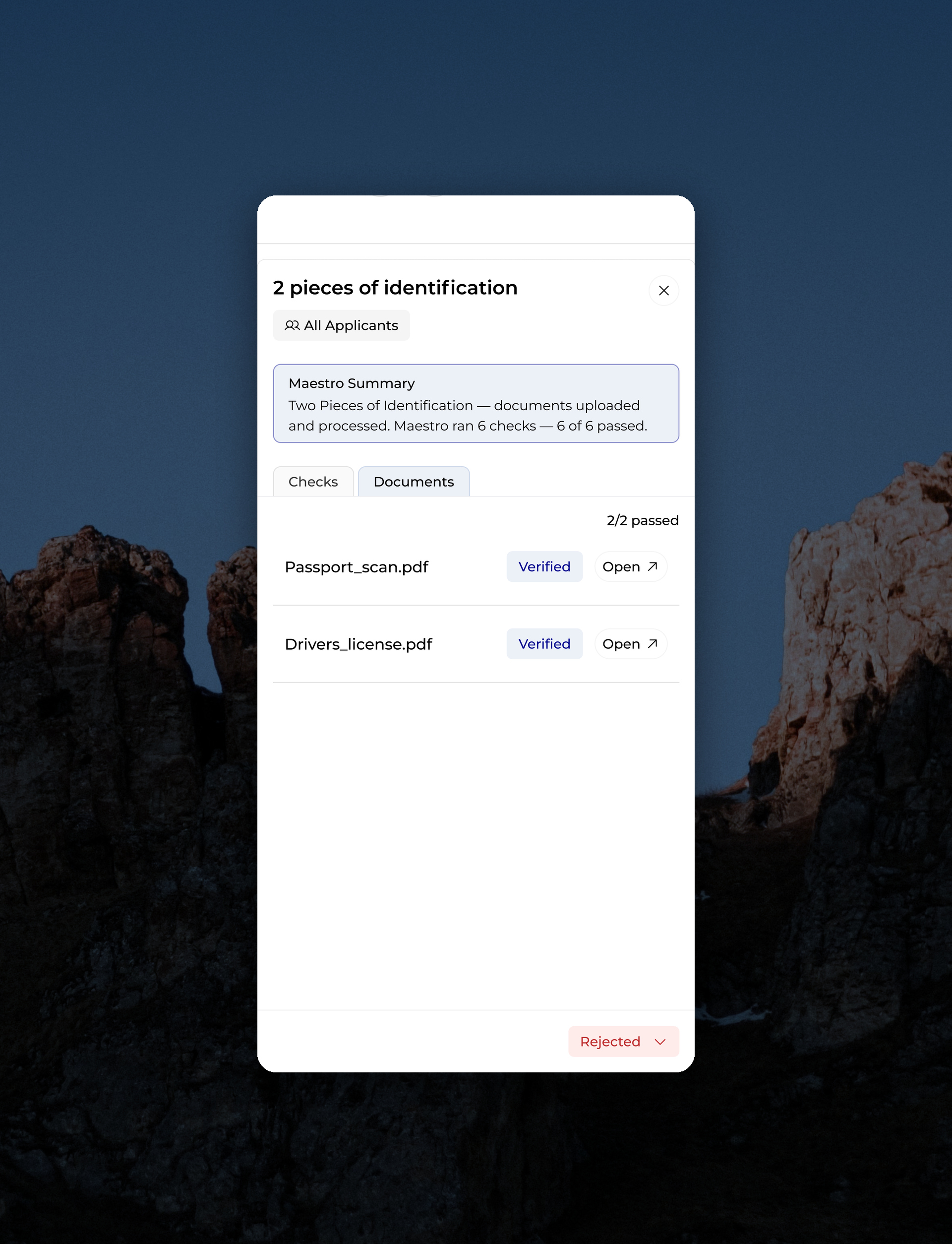
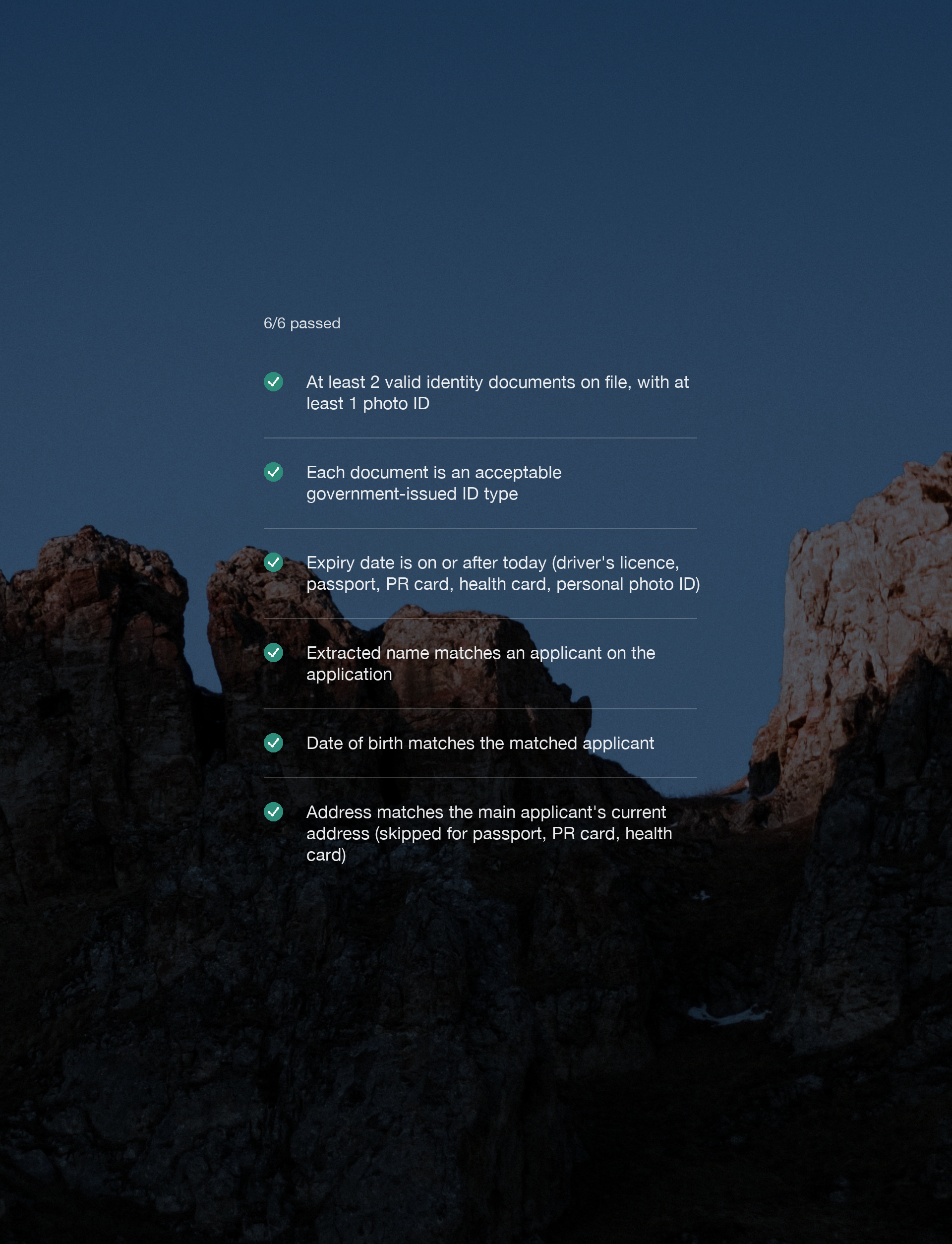
Show me how Maestro made the decision
Open up what sits under the hood of a decision and why Maestro approved or flagged something. The data has to tell a story an underwriter understands. Data points from horizontal checks often change the status of other checks, so it has to be obvious where you are, what is linked, and the decision path that was taken.
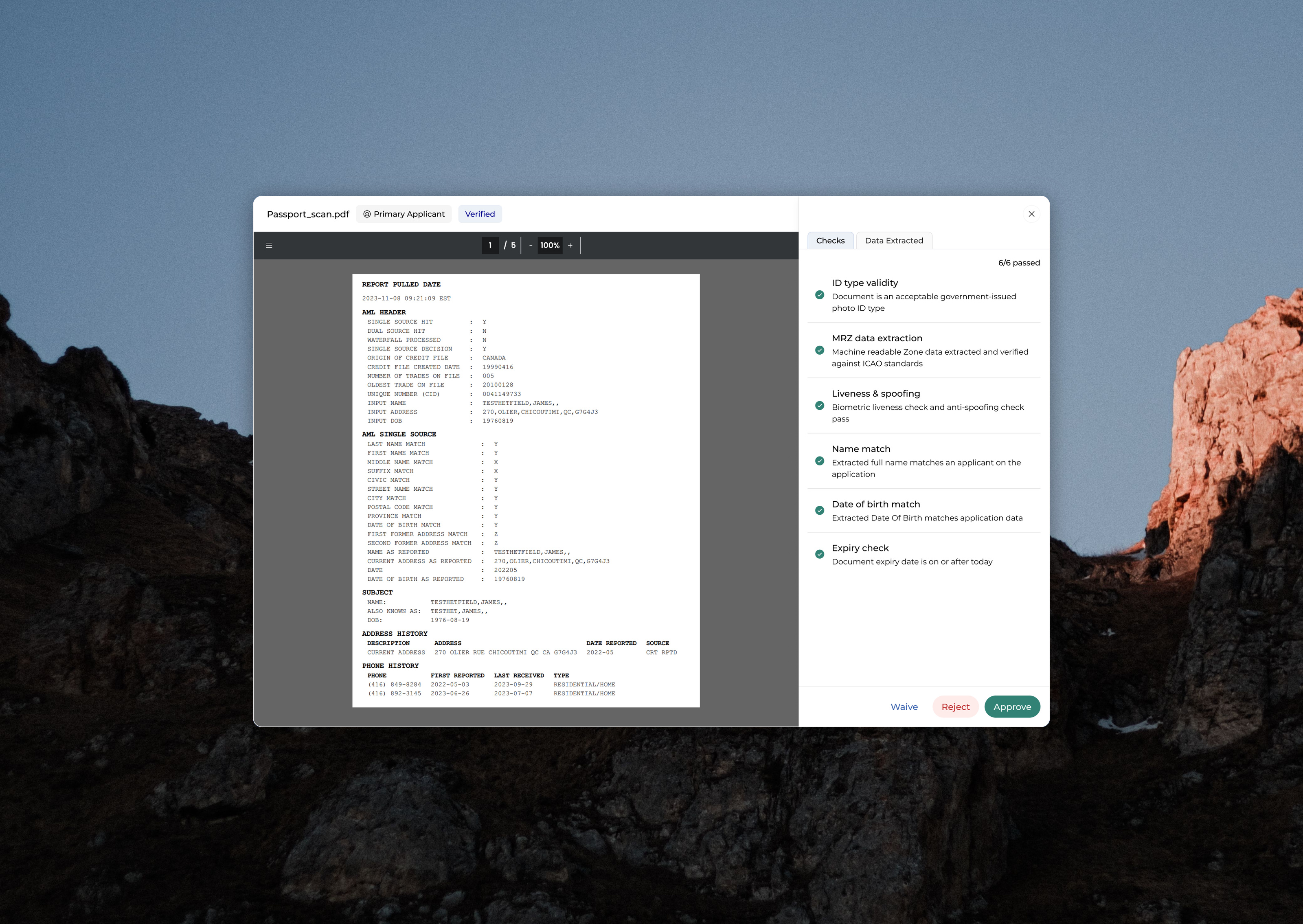
Allow me to control the decision
Underwriting is not a perfect science, and there are rules that sometimes need to be broken or overwritten. This level is about enabling the underwriter to act on the data or the documents to control the decision of a check, and ultimately the decision on the file.
From intake to recommendation — a structured path that keeps underwriting fast, auditable, and collaboratively owned.
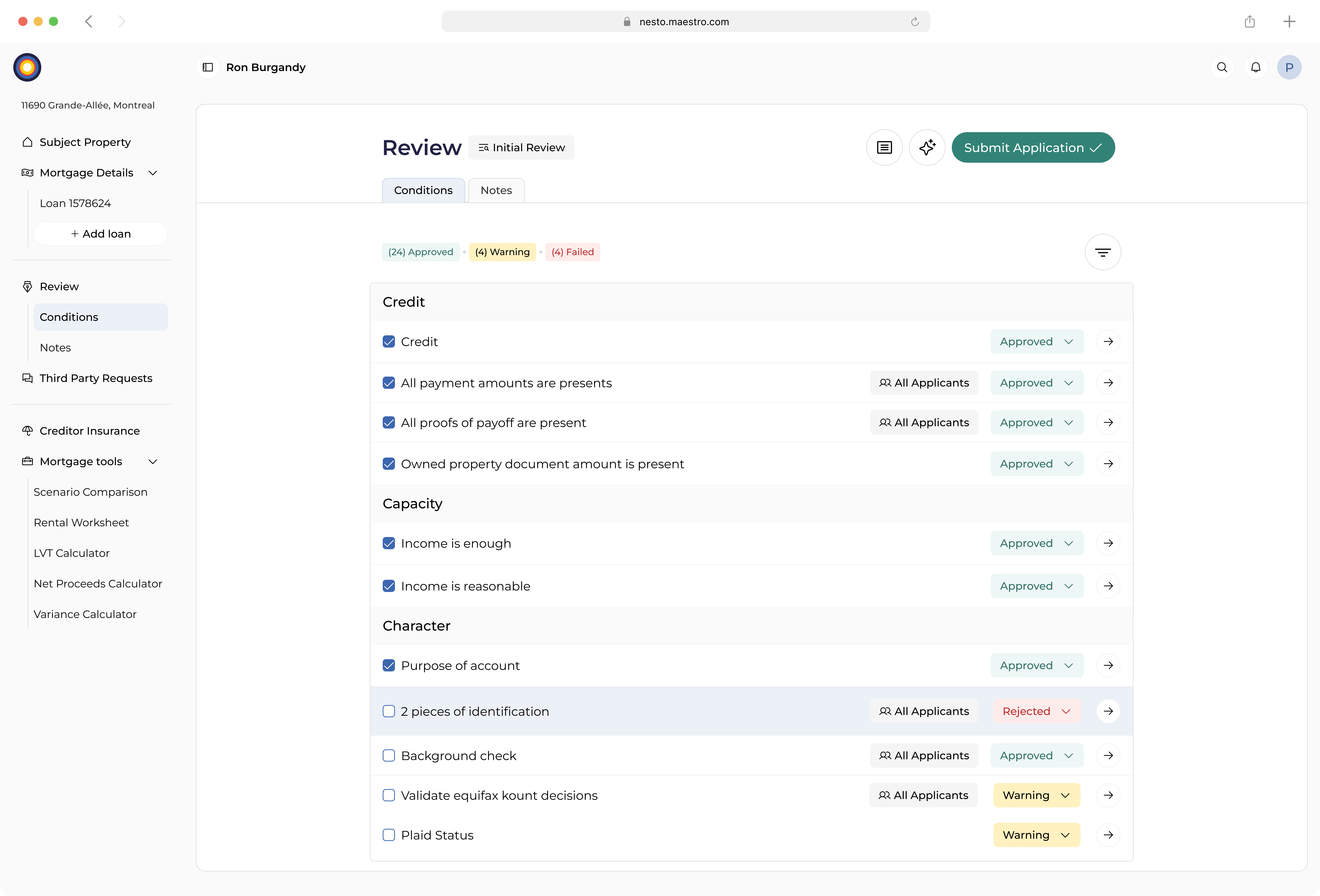
Built as a desktop-first system for complex file review — dense enough for power users, calm enough for long sessions of focused decision-making.
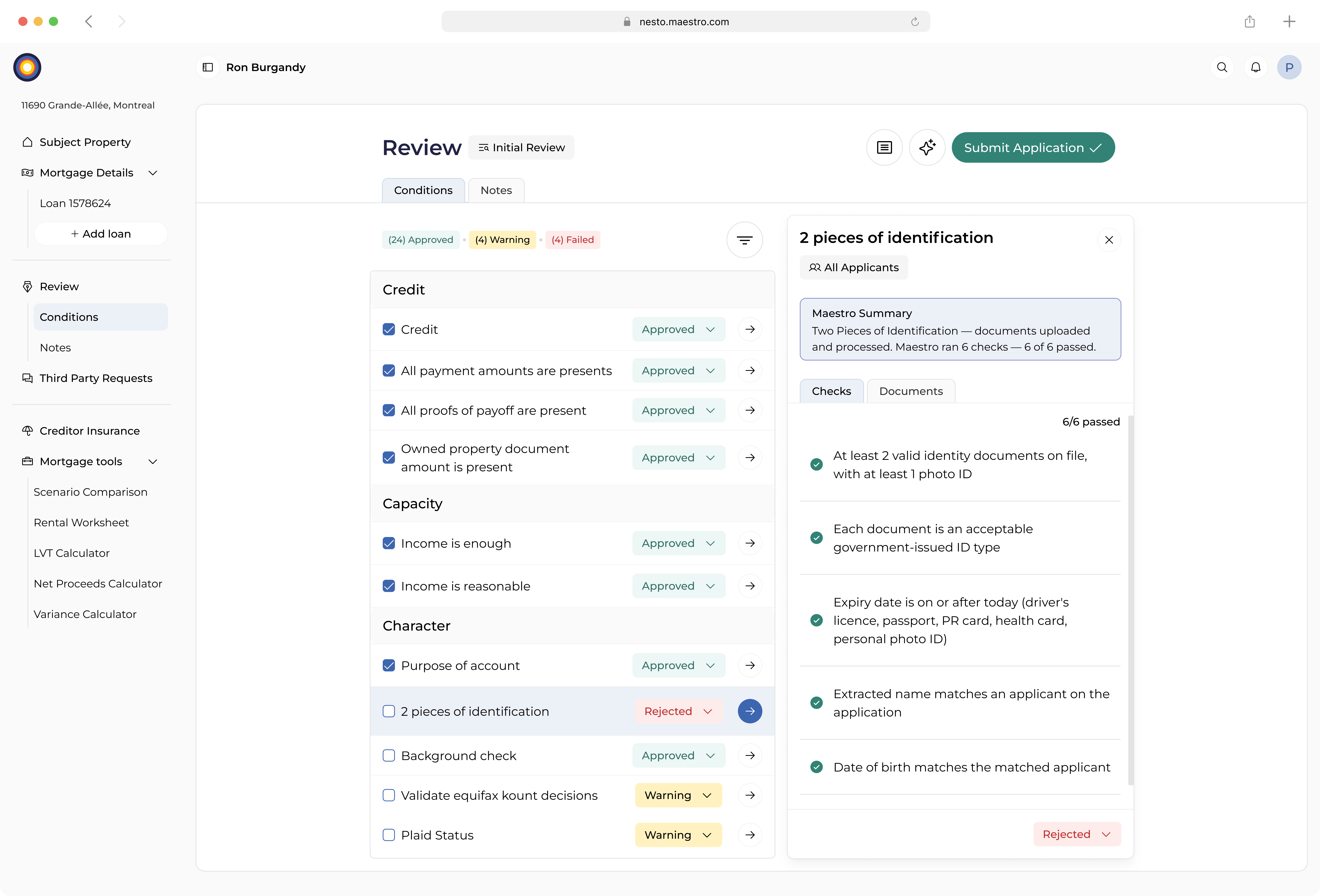
Risk, document gaps, and next actions are prioritized so reviewers know what needs attention — and what can wait.
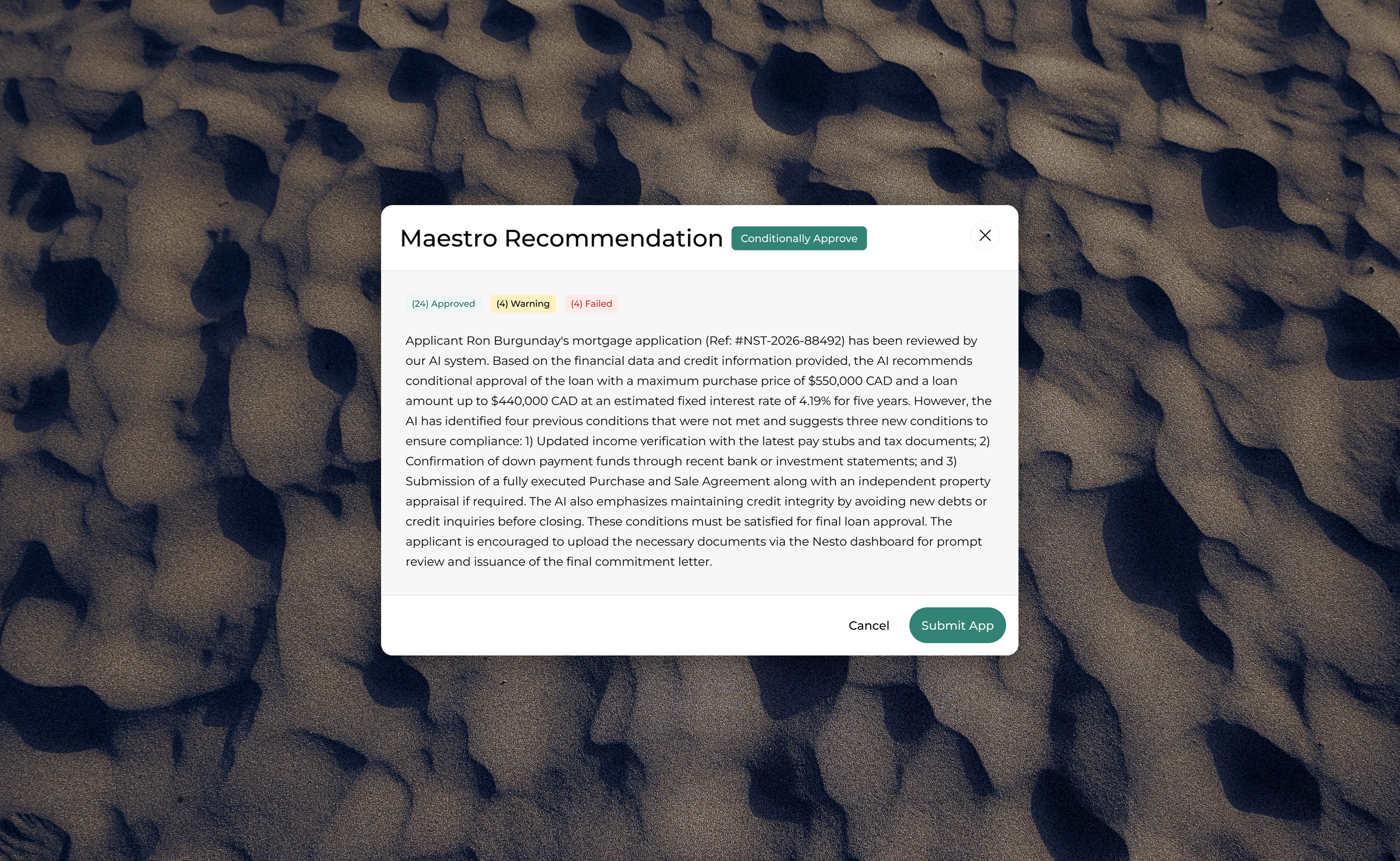
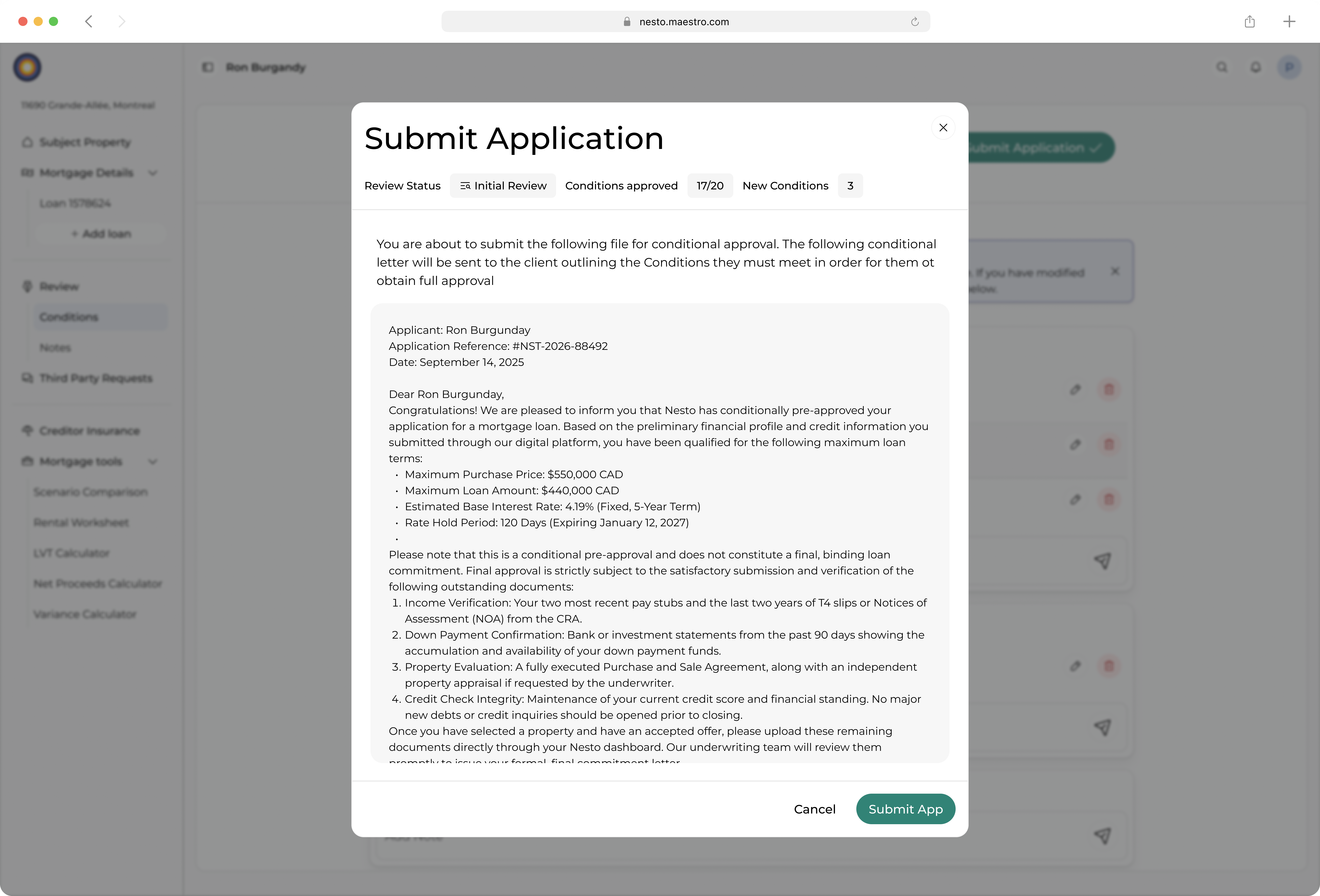
All of Maestro's decisioning is easy to discover, so the underwriter can validate checks, documents, and decisions at the speed of thought.
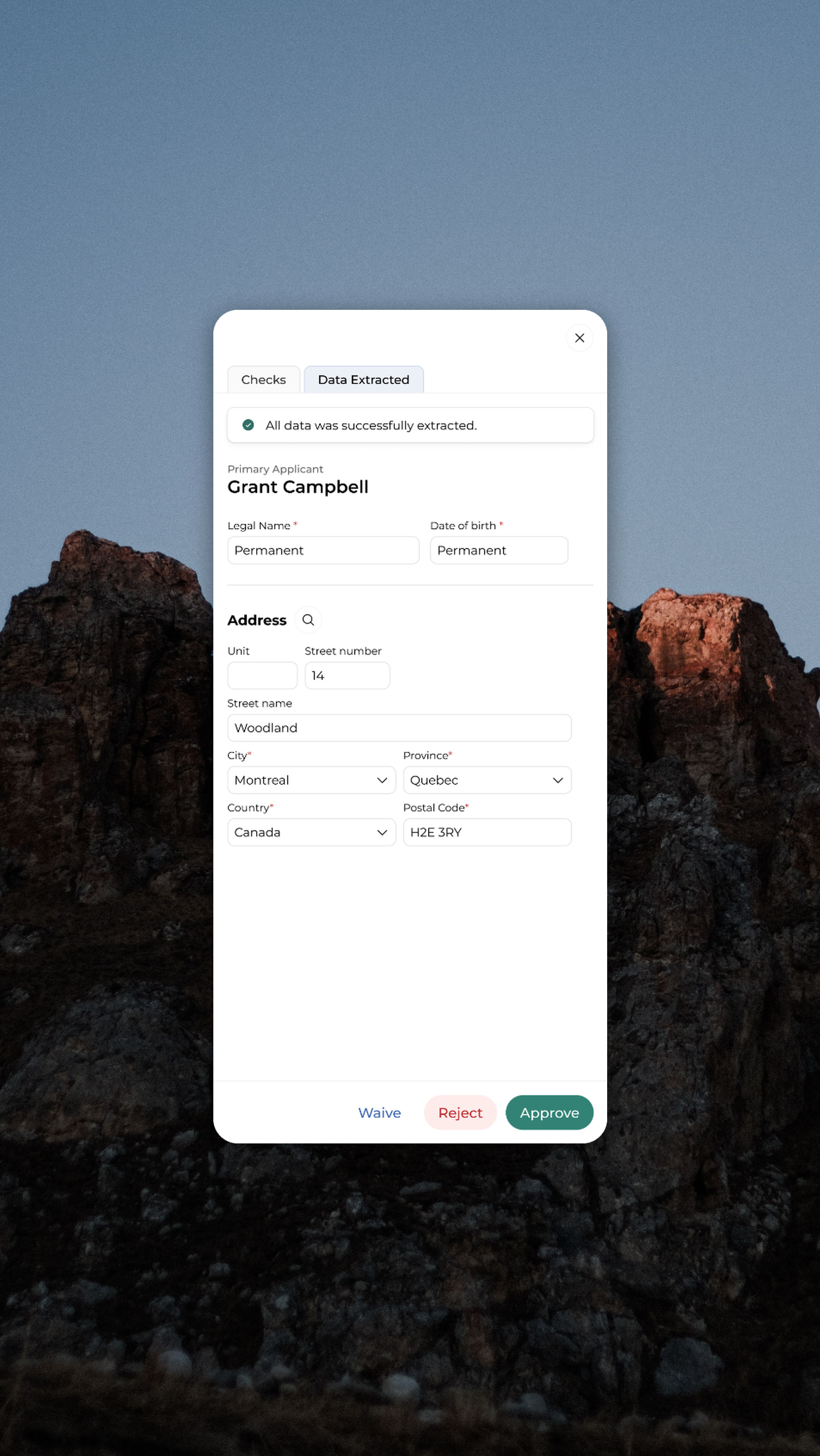
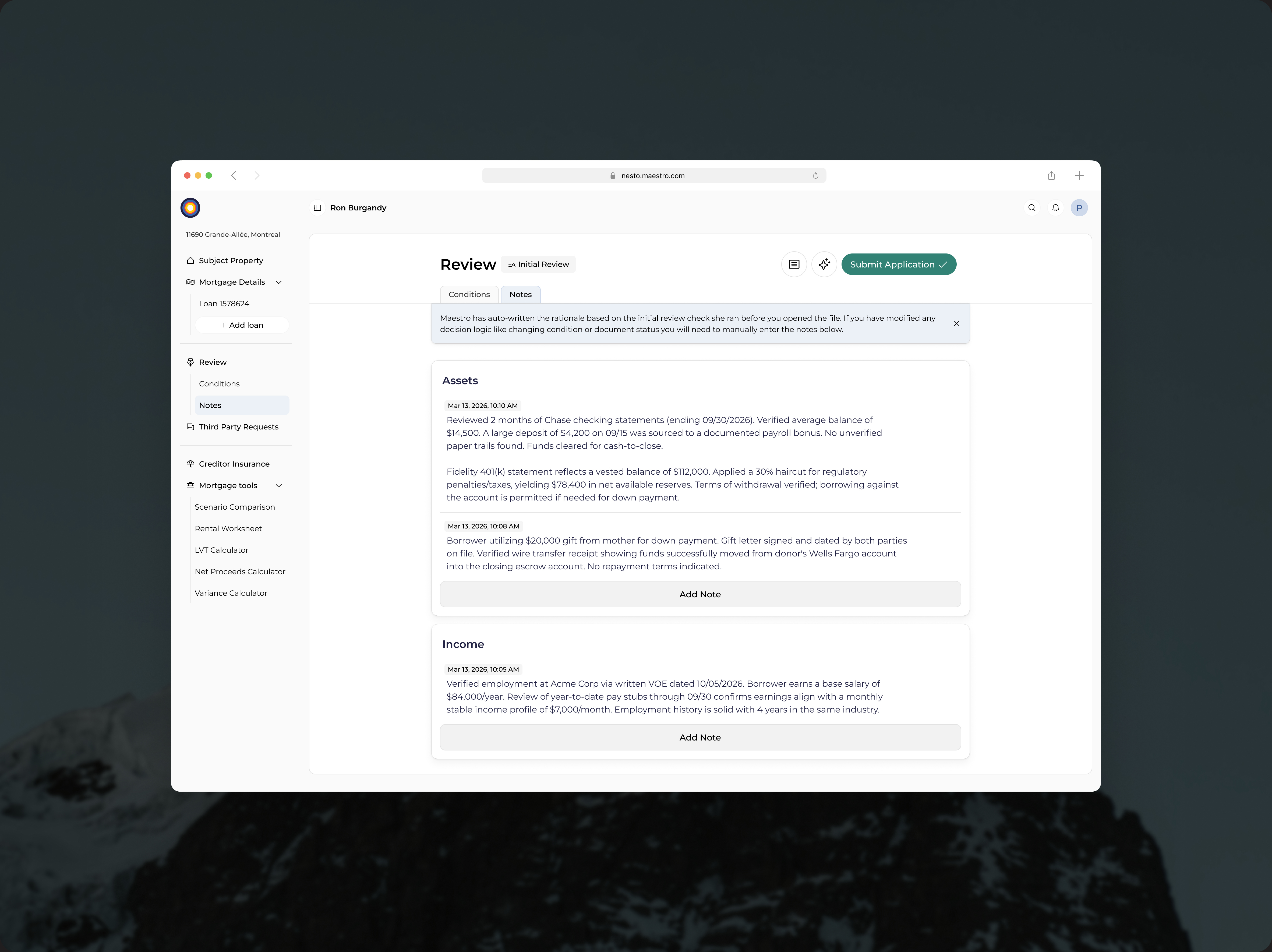
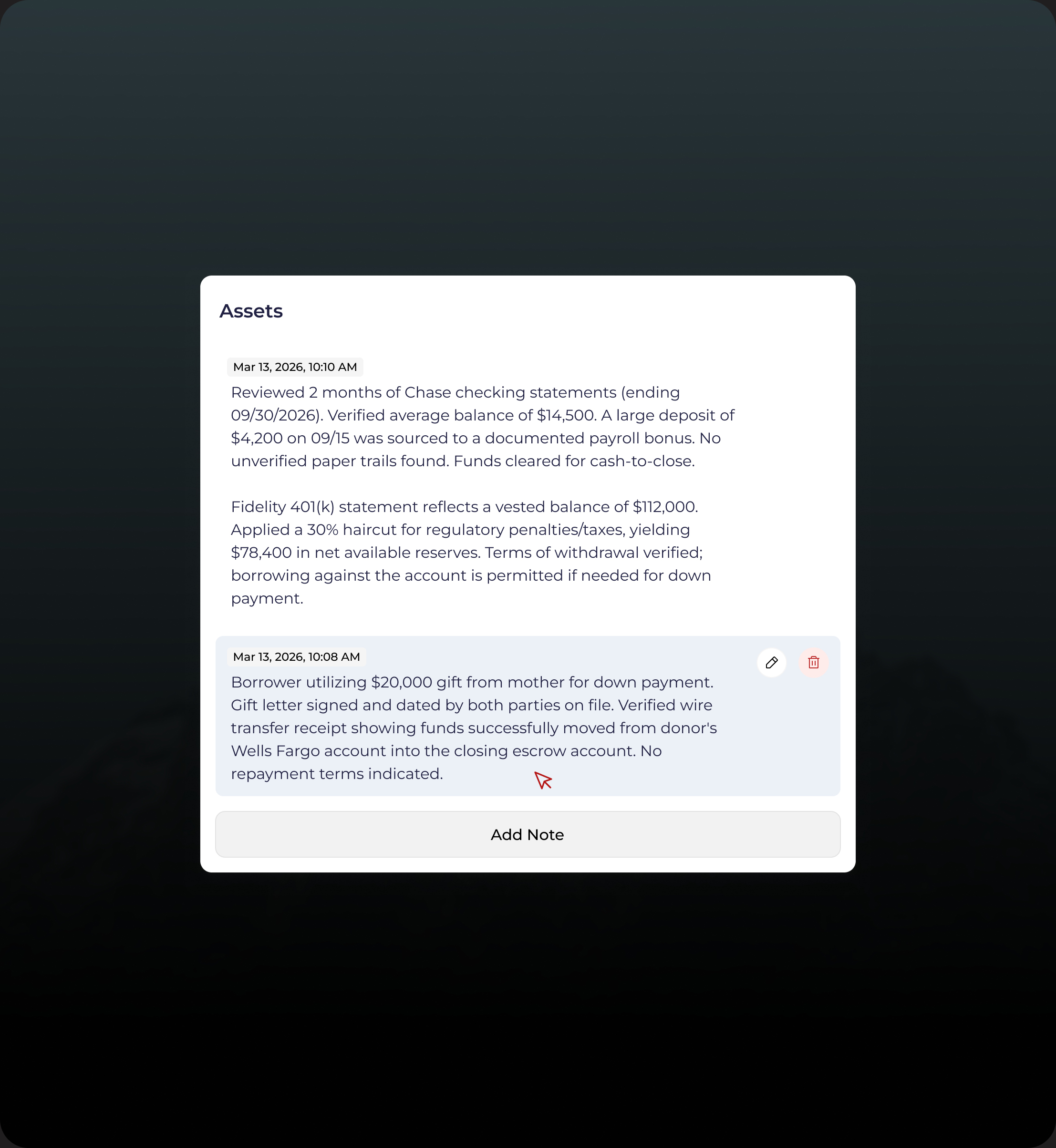
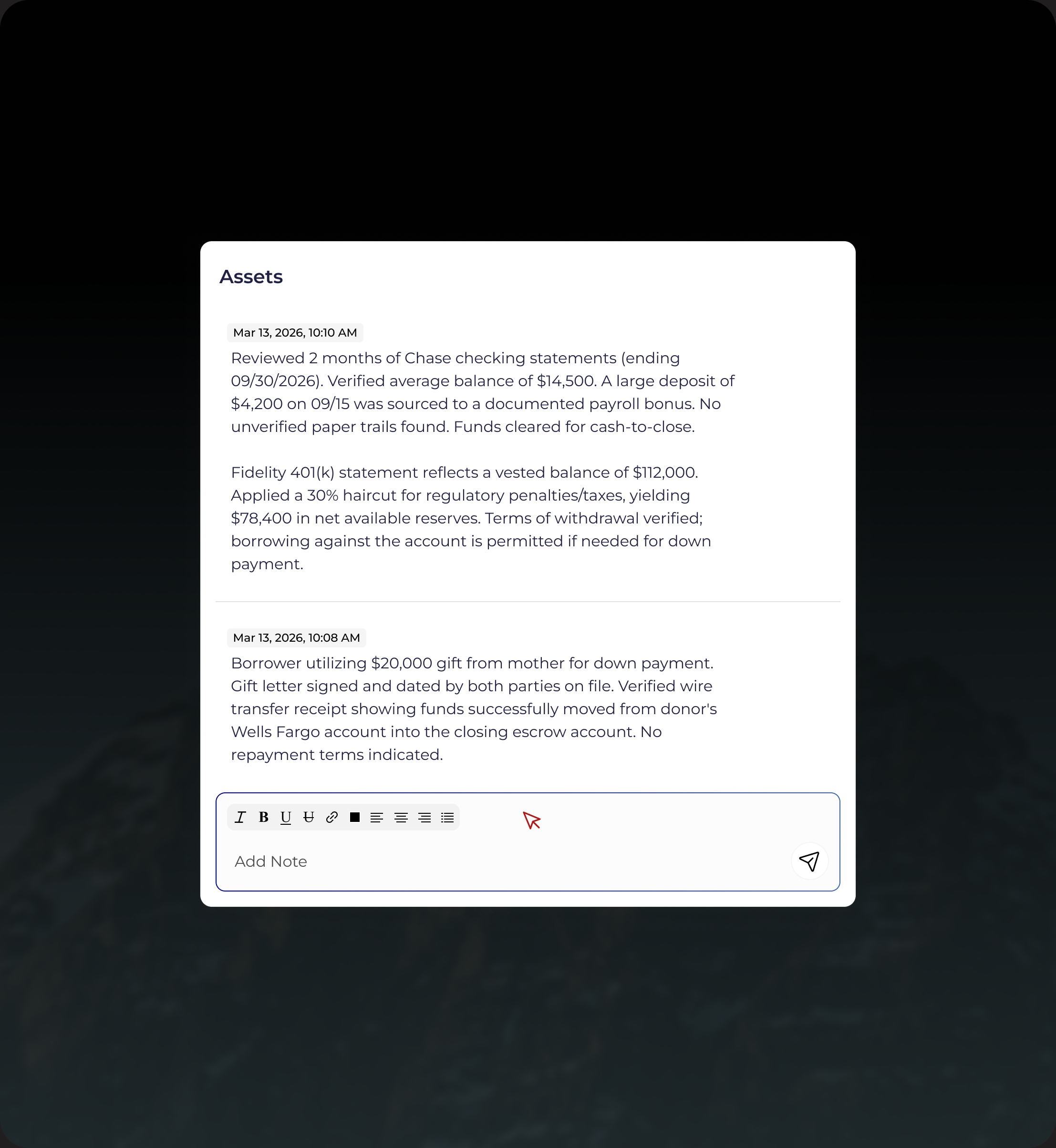
Notes are written automatically for the underwriter, based on their notes. The underwriter always owns the final set that is submitted with the application.
Next project
Rekwai
Rekwai
AI-enabled requirement and RFP management